SEO Tools
Lighthouse Local Review (2026): Is It Worth Using for AI Search Visibility?
Lighthouse Local review: an AI search visibility platform that tracks how your business appears in ChatGPT, Gemini, Claude, Perplexity and Google AI.
CodeHype7 min read
SEO is changing.
For years, businesses focused on ranking on Google, building backlinks, optimizing landing pages, and improving organic traffic. Those things still matter, but customers now have another way to discover businesses: AI-powered search.
Someone might ask ChatGPT to recommend a marketing agency, use Perplexity to compare local service providers, or turn to Google's AI features to research a business.
The question is simple: When potential customers ask AI who to hire, does your business show up?
That is the problem Lighthouse Local aims to solve.
In this review, we'll look at what Lighthouse Local does, its key features, who it's designed for, and what to consider before using it.
What Is Lighthouse Local?
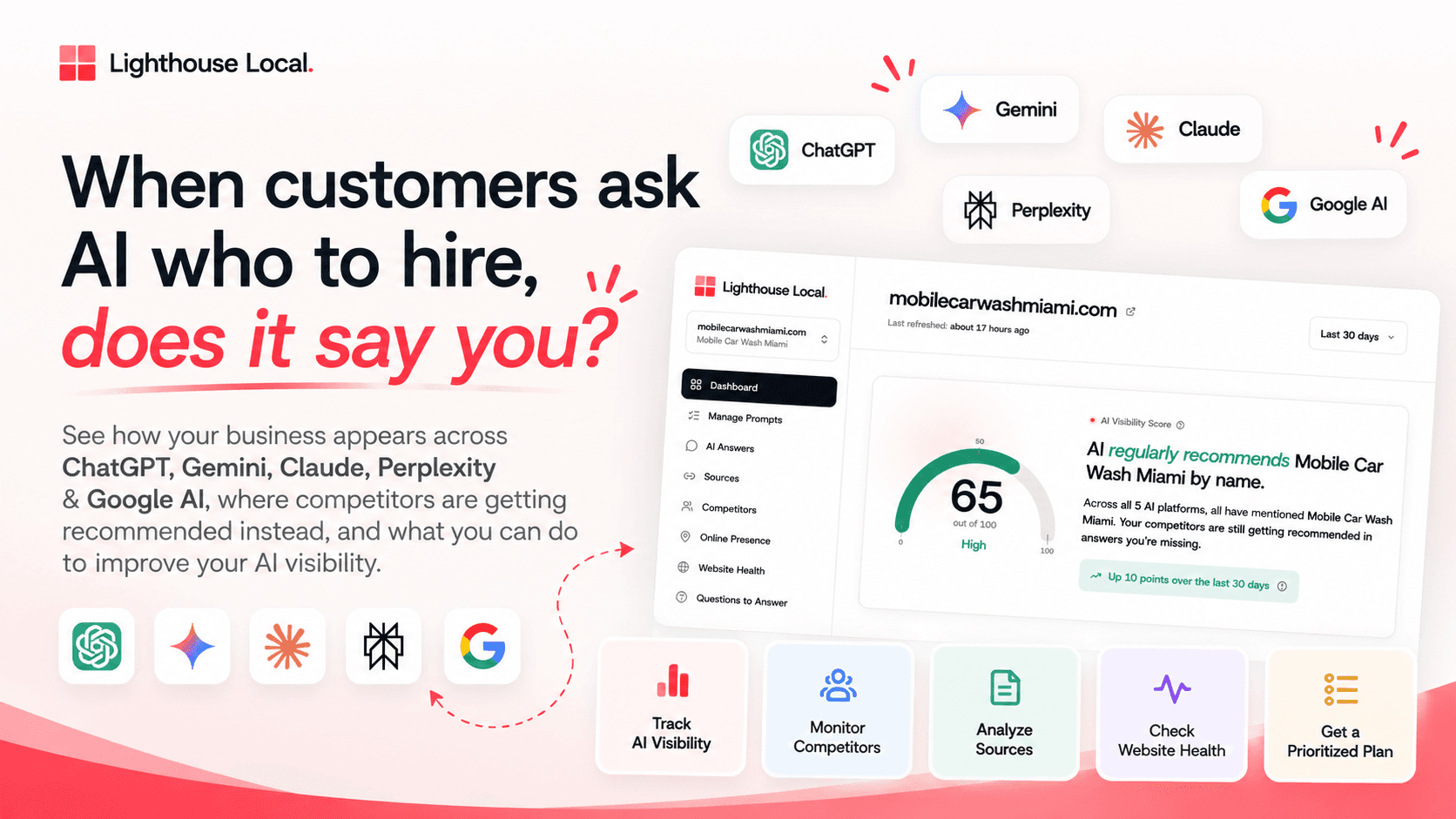
Lighthouse Local is an AI search visibility platform designed to help businesses understand how they appear across ChatGPT, Gemini, Claude, Perplexity, and Google AI.
Instead of manually testing dozens of prompts and keeping spreadsheets of competitor mentions, the platform brings AI visibility monitoring and related SEO insights into one place.
Its central idea is to help businesses understand three things:
- Whether AI systems mention or recommend their business.
- Which competitors are getting visibility instead.
- What improvements could help strengthen their online presence.
This makes it relevant to local businesses, SEO professionals, marketing agencies, and companies exploring Generative Engine Optimization (GEO).
Lighthouse Local Features Reviewed
1. AI Visibility Tracking
The main feature is AI visibility monitoring.
Businesses can track how they appear across multiple AI platforms and monitor their AI Visibility Score over time.
This is useful because checking one prompt in ChatGPT doesn't provide a complete picture of your online visibility. Different platforms can produce different answers, and results may change depending on the question and context.
A dedicated monitoring workflow can help you identify patterns rather than relying on occasional manual checks.
2. Competitor Analysis
One of the more interesting aspects of AI search is that your competitors may be getting recommended even when your business offers similar services.
Lighthouse Local helps identify which businesses appear in AI-generated answers and where you may be missing out on visibility.
For example, a local marketing agency could investigate which competing agencies appear when customers ask AI assistants to recommend a provider in its city.
These insights can help guide further research into competitors' websites, service pages, reviews, and online presence.
Of course, appearing in an AI answer doesn't automatically mean a competitor receives more customers. The value is in understanding the discovery landscape and identifying opportunities.
3. AI Citation and Source Analysis
AI recommendations don't exist in isolation. Depending on the platform, answers may reference websites and other sources that provide information about a business or industry.
Lighthouse Local helps analyze the sources behind AI answers.
This can give marketers a starting point for investigating which publications, directories, websites, or other sources are relevant to their niche.
Rather than building backlinks randomly, businesses can use these findings to identify credible sources worth studying and potential opportunities to strengthen their own online presence.
4. Website Health Monitoring
AI visibility is only one part of a business's digital presence.
A website can have useful content but still suffer from technical SEO issues, broken pages, or poor accessibility.
Lighthouse Local also includes website health monitoring, helping businesses investigate potential problems alongside their AI visibility data.
This broader approach is practical because technical SEO and website quality remain important parts of a sustainable search strategy.
5. Online Presence and Organic Rankings
The platform also monitors aspects of a business's broader online presence and traditional organic search performance.
This is useful for businesses that don't want to look at AI search in isolation.
For example, if your business is rarely mentioned in AI answers, you may want to examine your website content, organic rankings, business profiles, and third-party mentions together.
Having these areas available within one platform can help organize that investigation.
6. Prioritized Recommendations
Collecting data is useful, but knowing what to do next is often the harder part.
Lighthouse Local aims to turn its findings into a prioritized plan for improving AI visibility and overall online presence.
This is particularly helpful for business owners who understand the importance of SEO but don't have the time to investigate every competitor, citation source, and technical issue themselves.
The recommendations should be treated as a starting point for analysis, not a guarantee that a particular change will result in more AI recommendations.
Who Should Use Lighthouse Local?
Lighthouse Local is worth considering for several types of users.
- Local business owners: If customers use search engines and AI assistants to find service providers, monitoring whether your business appears in relevant answers can provide useful insights.
- SEO professionals: Agencies and consultants can use AI visibility data alongside conventional SEO analysis to understand how brands appear across different discovery channels.
- Digital marketing agencies: Agencies managing multiple businesses may find value in a more structured approach to monitoring competitors, sources, and website health.
- Businesses exploring GEO: Companies experimenting with Generative Engine Optimization can use AI visibility monitoring to establish a baseline and track changes over time.
It's less compelling for someone who only wants basic keyword research or a simple website builder. Its core purpose is monitoring AI visibility and related search performance.
What We Like About the Approach
The strongest part of Lighthouse Local's approach is that it treats AI visibility as something to monitor rather than guess about.
Here are three things that stand out:
- Multiple AI platforms: It covers several major AI discovery experiences instead of focusing on only one.
- Competitor and source insights: It helps users investigate not just whether they appear, but who else is visible and which sources are involved.
- A broader SEO perspective: Website health, online presence, and organic rankings provide context beyond AI mentions alone.
For businesses already investing in SEO, this makes AI visibility a more structured part of their existing workflow.
What Should You Consider Before Using It?
No AI visibility platform can guarantee that ChatGPT, Gemini, or another AI system will recommend your business.
AI-generated responses can vary by prompt, location, platform, and time. A visibility score is a useful tracking indicator, but it isn't the same as qualified traffic, leads, or revenue.
You should also consider the following before choosing a tool:
- Which AI platforms and search experiences are included in your plan?
- How frequently is visibility data refreshed?
- How many prompts, competitors, and locations can you monitor?
- Does the pricing fit your business or agency?
- Can you connect visibility changes to meaningful business outcomes?
Lighthouse Local offers a 14-day free trial with access to its features, according to its website. Checking the current pricing and plan limits before subscribing is a sensible next step.
Lighthouse Local Pricing
Lighthouse Local is a paid platform, and its website advertises a 14-day free trial with all features and the ability to cancel anytime.
Since pricing and plan limits can change, check the official website for current details before making a decision.
You can explore the platform here: Lighthouse Local.
Final Verdict: Is Lighthouse Local Worth Trying?
If you're trying to understand how your business appears across AI search platforms, Lighthouse Local is worth exploring.
Its combination of AI visibility tracking, competitor monitoring, source analysis, website health checks, and organic search insights addresses a real challenge: businesses need a better way to understand how they are discovered beyond traditional search results.
The platform will be most useful if you're prepared to act on the insights it provides. Monitoring your visibility alone won't improve your SEO. You still need to maintain your website, publish helpful content, build a credible online presence, and evaluate which changes make a measurable difference.
Our recommendation is to use the free trial to establish a baseline, test the questions your customers are likely to ask, and examine which competitors appear in the results.
If AI search visibility is becoming part of your SEO strategy, Lighthouse Local is a tool worth putting on your shortlist.
Note: This review describes the platform's advertised capabilities. Independent performance testing and measured results were not conducted for this article.